1 June 2026
Protect Business Margins in Australia 2026
Learn strategies to protect business margins in Australia, manage costs, and enhance cash flow in 2026.
Business Finance & Strategy, protect business margins Australia 2026
How to Protect Your Business Margins in Australia in 2026
Australian small businesses are heading into 2026 facing rising costs, cautious customers, and tighter cash flow. Here’s how to protect business margins Australia 2026 and stay profitable, not just busy.
Author: Alison Wheeler
Why margins are under pressure in 2026
Across the country, rising costs small business Australia is more than a headline - it is the daily reality. Labour, rent, insurance, inputs, freight, fuel, and energy have all climbed since the pandemic. Surveys show that more than 70% of small businesses now nominate rising costs as their biggest barrier to growth, and many owners are cutting their own pay just to keep the doors open.
At the same time, high interest rates are increasing borrowing costs and squeezing working capital. With the RBA cash rate sitting above 4% in early 2026, loans, overdrafts, and equipment finance all cost more to service. This combination of higher expenses and limited pricing power is compressing margins across hospitality, retail, construction, and professional services.
The impact of rising costs on cash flow and confidence
When every line on your profit and loss creeps up, it flows straight through to business cash flow 2026. Higher wages, rent, and energy bills mean more cash leaving the bank each month. For many owners, this shows up as:
Tighter buffers - less cash on hand to absorb seasonal dips or slow-paying clients
More reliance on overdrafts or credit cards to fund day-to-day operations
Delayed investment in staff, marketing, or technology that could drive growth
Add in a climate of cautious consumer confidence and the challenge is magnified. With households feeling the pinch from mortgage repayments and living costs, many are spending more carefully. They are shopping around, delaying discretionary purchases, and trading down to cheaper options. That means simply pushing prices up without a strategy can backfire, driving customers to competitors.
📌 Key takeaway: Protecting margins in 2026 is not just about cutting costs or raising prices. It is about reshaping your business model so you deliver strong value and get paid appropriately for it.
Changes in superannuation: what payday super July 2026 means
One of the biggest structural shifts on the horizon is the move toward more frequent superannuation payments, commonly referred to as payday super July 2026. While the exact implementation details will continue to evolve, the direction is clear: the days of paying super quarterly are ending, and employers will need to align super payments much more closely with payroll.
For small businesses, this has two major implications for margins and cash flow:
Cash flow timing: You will need the cash available for super contributions every pay cycle, not just once a quarter. That reduces your effective float and makes accurate cash flow forecasting non-negotiable.
Compliance risk: With more frequent payments comes less room for error. Late or missed contributions can attract penalties, adding to already rising costs.
Building the cost of superannuation into your pricing and workforce planning now is essential if you want to protect business margins Australia 2026 and beyond.
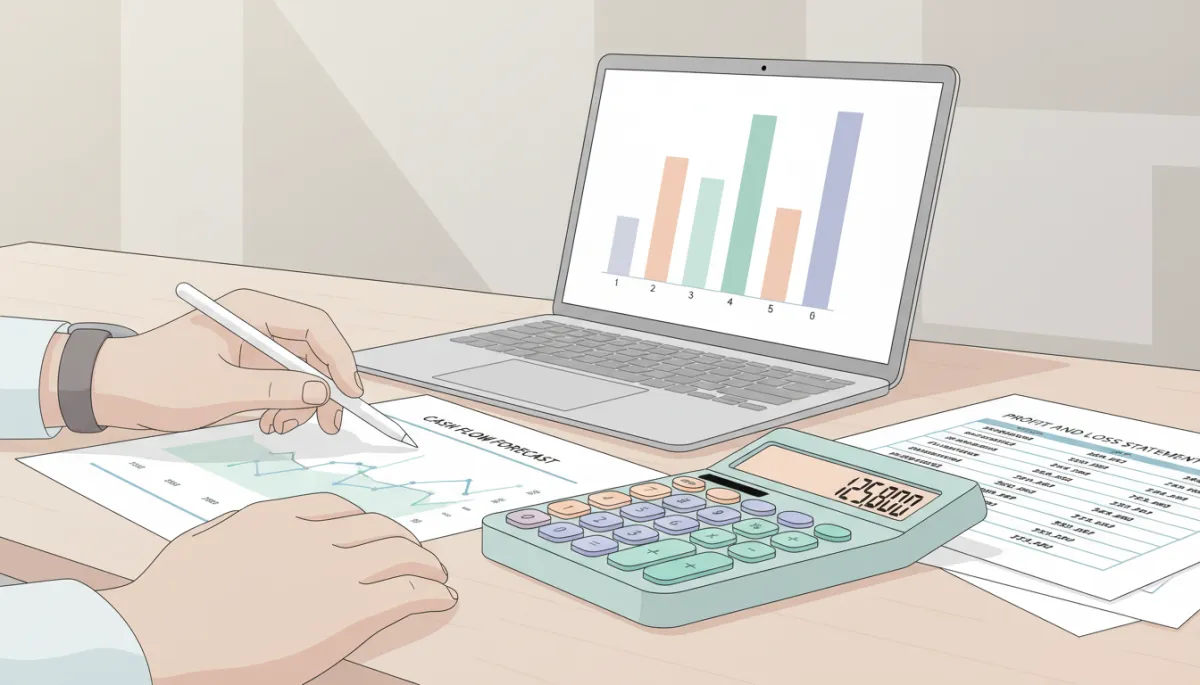
Regular margin reviews help you respond to cost pressures before profits disappear.
Know your numbers: the foundation of margin protection
In a volatile environment, knowing your numbers is the difference between steering your business and simply reacting. This is especially true for any service business profit margin, where time leakage, scope creep, and discounting can quietly erode profitability.
Track your gross margin by product, service line, or client segment so you know exactly where the profit is made - and where it is not.
Monitor labour utilisation and effective hourly rates, not just wages. In services, idle time and over-servicing destroy margins.
Build a rolling 13-week cash flow forecast so you can see pressure points coming and plan for super, BAS, and loan repayments.
💡 Pro Tip: If you are not confident reading your P&L or cash flow, working with a business coach Gold Coast or your accountant for a few focused sessions can transform the way you make decisions.
Review your costs with a clear strategy
Cost cutting for its own sake can damage your brand and service levels. Instead, approach reviewing costs as a strategic exercise focused on value, efficiency, and risk. Work through your expenses line by line and ask three questions:
Does this cost directly contribute to revenue, customer experience, or risk management?
Can I achieve the same outcome more efficiently, or with a different supplier?
Is this cost still appropriate for the size and stage of my business in 2026?
Focus especially on:
Energy and utilities: Take advantage of Default Market Offer reductions from July 2026 by renegotiating contracts and comparing providers.
Subscriptions and software: Cull tools that are under-used, duplicated, or not clearly tied to revenue or time savings.
Rent and premises: Explore subletting unused space, renegotiating lease terms, or shifting to a hybrid model if foot traffic is down.
Restructure your offers to maintain - and grow - margins
When costs rise and customers are cautious, the businesses that thrive are those that restructure offers rather than simply discounting or absorbing every increase. This is especially powerful for service businesses, where packaging and positioning can dramatically change your effective margin.
Bundle for value: Create packages that solve a complete problem at a premium price, instead of selling one-off tasks. This lifts your average transaction value and smooths demand.
Introduce tiered pricing: Offer clear “good, better, best” options so price-sensitive clients can choose a leaner package, while others step up to higher-margin services.
Shift to recurring revenue: Where possible, move from one-off projects to retainers, memberships, or maintenance plans. Recurring income stabilises business cash flow 2026 and improves planning.
Every time you change your pricing or packages, communicate the value clearly. In a market of cautious consumer confidence, customers will pay more when they understand exactly what problem you are solving and why your approach is different.
Get support: you do not have to navigate 2026 alone
The businesses that will come through 2026 stronger are not necessarily the biggest or the ones with the deepest pockets. They are the ones whose owners are willing to get help, make decisions quickly, and adapt their models to protect margins.
If you are ready to tighten your numbers, review your cost base, and redesign your offers, start by exploring our coaching packages and our latest pricing strategy blog to see how other Australian owners are responding to rising costs.
Your next step
2026 does not have to be the year your profits disappear. With a clear understanding of your numbers, a deliberate approach to reviewing costs, and the courage to restructure your offers, you can protect business margins Australia 2026 and build a more resilient, profitable operation.
Book a Strategy Call.