9 June 2026
AI in Business: Keep the Human Touch
Learn how Australian SMEs can adopt AI strategically without losing the human edge that retains clients.
AI strategy, Small business, Australia
How to Use AI in Your Business Without Losing the Human Edge
AI adoption among Australian SMEs is rising fast. But the businesses winning aren't using the most tools. Here's how to use AI strategically, not reactively-especially if you're wondering how to use AI in small business Australia without losing the human edge that actually makes clients stay.
AI adoption is high in Australia-but depth is still low
If you run a small service business in Australia, you're not early to AI anymore. Depending on whose numbers you look at, between 60–70% of Australian SMEs now use AI regularly-QuickBooks puts it at 69%, and AI Lab Australia at 64% using AI on a daily, weekly, or monthly basis. At the same time, more conservative estimates like Credare suggest only 34% report active AI use once you strip out casual dabbling with tools like ChatGPT.
The more important statistic for any AI strategy small business conversation is this: across multiple studies, only around 5% of SMEs are “fully enabled”-meaning AI is actually integrated into workflows, data, and skills, not just sitting in a browser tab. In other words, AI adoption Australia 2026 is broad, but often shallow. That is a huge opportunity if you’re willing to be strategic instead of reactive.
Tools vs strategy: productivity is not the same as growth
As a senior software engineer, I think in systems. Most small businesses I coach think in tools. That’s the first gap to close if you care about how to use AI in small business Australia in a way that lasts longer than the next shiny app launch.
Productivity is doing the same work faster-shorter days, fewer manual tasks, less admin. AI is already excellent here: QuickBooks reports 79% of adopters see productivity gains and 28% say their workdays are shorter.
Growth is doing different work-better offers, deeper relationships, higher-value clients, new services. This is still overwhelmingly human-led: judgement, insight, and trust.
If your AI strategy is “let’s install more tools,” you’ll get productivity but stall on growth. The businesses that are quietly winning are using AI to strip out repeatable tasks so their humans can sit longer in the high-value work: sales conversations, complex problem solving, creative thinking, and service delivery that actually feels personal.
💡 Pro Tip: Every time you say “this is boring but necessary,” you’ve probably found an AI candidate. Every time you say “this is where clients really trust us,” you’ve found work to protect for humans.
Where AI belongs: repeatable tasks, not relationships
The cleanest way to keep your human edge is to draw a hard line between repeatable tasks and relationship work. In every service business technology conversation I have, we start with one question: “What are you doing more than 10 times a week that a smart assistant could do 80% as well?”
Inbox triage, tagging and routing
Drafting routine replies and proposals from templates
Summarising client calls and updating your CRM
Generating first-draft content for blogs, FAQs, and help docs
That’s where business AI productivity is won. You automate the repeatable so you can reinvest those hours into the non-repeatable: the nuanced call with a worried client, the strategy session with your team, the offer redesign that adds $50k to annual revenue.
A simple automation pattern (without losing control)
You don’t need a full engineering team to start integrating AI into your workflows. Here’s a minimal Python example I often use with service businesses to classify incoming emails and draft a human-editable reply. It’s deliberately simple, but it shows the pattern: AI handles the grunt work, humans keep the judgement.
import os
from openai import OpenAI

client = OpenAI(api_key=os.environ["OPENAI_API_KEY"])

def classify_email(subject: str, body: str) -> str:
    """Return a simple label so humans can prioritise."""
    prompt = f"""
You are helping an Australian small service business.
Classify this email into one of:
- NEW_LEAD
- EXISTING_CLIENT
- ADMIN
- SPAM

Subject: {subject}
Body: {body}
Return only the label.
"""
    response = client.chat.completions.create(
        model="gpt-4.1-mini",
        messages=[{"role": "user", "content": prompt}],
        max_tokens=10,
        temperature=0
    )
    return response.choices[0].message.content.strip()

def draft_reply(subject: str, body: str, label: str) -> str:
    """Create a first-draft reply for a human to edit."""
    prompt = f"""
You are a polite Australian business owner.
Draft a short email reply. Use plain language.
Keep placeholders like <PRICE> or <DATE> for humans to fill.

Category: {label}
Subject: {subject}
Body: {body}
"""
    response = client.chat.completions.create(
        model="gpt-4.1-mini",
        messages=[{"role": "user", "content": prompt}],
        max_tokens=250,
        temperature=0.4
    )
    return response.choices[0].message.content.strip()

# Example usage
subject = "Question about your coaching packages"
body = "Hi, I'm based in Melbourne and wondering about your 1:1 AI strategy coaching..."

label = classify_email(subject, body)
reply_draft = draft_reply(subject, body, label)

print("Label:", label)
print("Draft reply:\n", reply_draft)
Notice what this does not do: it doesn’t send the email. The AI helps you prioritise and draft; a human still decides what’s appropriate, checks tone, and hits send. That’s the core of AI tools vs human connection done well-AI accelerates, humans approve and connect.
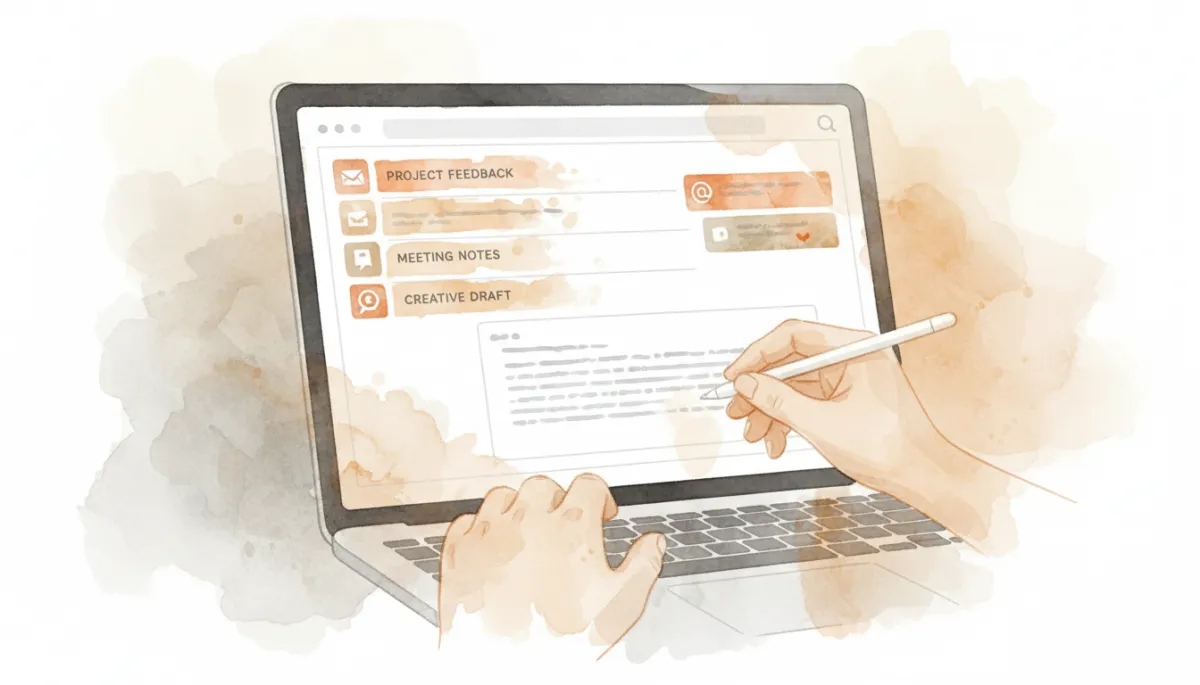
Let AI prepare the work so humans can spend time on nuance and trust.
Why most SMEs still haven’t integrated AI into their services
Despite high usage numbers, most Australian SMEs are still only using AI around the edges of the business. Credare’s research suggests that while exposure to AI might be as high as 80%+, only about 5% of businesses move beyond pilots into integrated workflows or AI-enabled products and services. The National AI Centre’s SME Pulse backs this up: many business owners either don’t trust AI, don’t see relevance, or don’t know where to start.
In practice, that means:
You might use ChatGPT to draft content, but your actual service delivery looks exactly like it did in 2022.
You might use Canva AI for graphics, but your offer design, pricing, and client experience aren’t informed by any AI insights.
You might have a chatbot on your site, but no clear handover to a human when the conversation actually matters.
This is where strategic AI use comes in: not “more tools,” but a deliberate map of where AI supports your core value, and where it must stay out of the way.
Protecting the human edge: trust, relationships, judgement, insight
The real risk in 2026 isn’t that AI will replace all your jobs. It’s that you’ll quietly erode the parts of your business where humans are uniquely valuable-because it feels “efficient” in the short term. To avoid that, you need a simple rule set for your AI strategy small business roadmap:
Trust: Any moment where a client is deciding whether to believe you-pricing, scope, sensitive issues-should be human-led, with AI only in a supporting, behind-the-scenes role.
Relationships: Don’t outsource your check-in calls, difficult conversations, or negotiations to bots. Use AI to prep notes, suggest talking points, and summarise afterwards, not to stand in for you.
Judgement: Where stakes are high or context is messy, AI should propose options, not make decisions. Keep a human final review step baked into your workflows.
Insight: Let AI surface patterns and anomalies in your data, then have humans interpret what that means for your market, your offers, and your clients.
📌 Key Takeaway: If a task builds or spends trust, keep a human in the loop. If it’s repetitive, data-heavy, and low stakes, it’s a candidate for automation.
From “tools first” to “strategy first”: your next step
In AI blog week 1, we looked at the foundations: what AI is actually good at, and where it tends to fail in small business contexts. This second AI blog is about moving from theory to deliberate design:
Map your repeatable tasks across marketing, sales, delivery, and admin.
Decide which of those can be safely handled 80% by AI with a human review step.
Ring-fence the human edge: identify the specific moments in your client journey where trust, relationships, judgement, and insight matter most-and design them to be more human, not less.
Only then pick the minimum set of AI tools that support that design.
Ready to design your AI strategy, not just add more tools?
If you’re serious about how to use AI in small business Australia in a way that drives growth, not just busyness, you don’t need another list of 50 tools. You need a clear, opinionated strategy that respects the human edge your competitors can’t copy-paste from the internet.
That’s exactly what we work on in my AI strategy coaching packages-combining my background as a senior software engineer with your deep knowledge of your clients and market. We’ll:
Audit your current tools and workflows for low-hanging automation wins
Design a simple, practical AI roadmap for the next 6–12 months
Implement a few high-impact automations that free up your time for human-led, high-value work
🚀 Call to action: If you want AI to support your growth rather than replace essential human work, book a strategy call. We’ll map out where AI belongs in your business-and where it absolutely doesn’t.