7 June 2026
2026: A Turning Point for Aussie Small Businesses
Discover why 2026 is crucial for Australian small businesses facing cash flow challenges due to late payments.
Cash Flow, Late Payments, Australian Small Business
Late Payments & Cash Flow: Why 2026 Is a Turning Point for Australian Small Businesses
Late-paying customers are no longer just an annoyance for small businesses in Australia-they are a direct threat to survival, especially with payday superannuation changes arriving on 1 July 2026. Now is the time to tighten your systems, protect your cash flow, and stop carrying everyone else’s delays on your shoulders.
Why Late Payments Matter More Than Ever in 2026
Late payments have always hurt small businesses, but the situation in Australia in 2026 is particularly severe. Recent data shows around 68–80% of small and medium businesses are regularly dealing with overdue invoices, with payments arriving almost seven days late on average on top of already stretched terms (Xero, Banking Day).
For small businesses already juggling rising costs, interest rates, and staff expectations, overdue invoices are not just a nuisance-they are a cash flow choke point. And with payday superannuation commencing on 1 July 2026, the cost of letting late payments slide will only increase.
The Real Cash Flow Impact of Late Payments
Late payments hit your business in multiple ways:
Liquidity crunch: When clients pay late, there is less cash available for wages, rent, stock, and tax obligations. Many owners are forced to dip into overdrafts or personal savings just to keep the lights on-around 60% of SME owners have used personal funds to plug these gaps (Overdraftme).
Higher borrowing costs: Relying on credit cards, overdrafts, or short-term loans to cover late invoices pushes up interest costs and financial risk, eroding already thin margins.
Lost growth: When your cash is trapped in other people’s bank accounts, it is harder to invest in marketing, staff, or new equipment. Opportunities are delayed-or missed entirely.
One estimate suggests the average Australian small business loses around $2,400 per month to late payments-almost $28,800 a year (Overdraftme). That is money that could be paying your salary, funding a new hire, or building a cash buffer.
Payday Super from 1 July 2026: Why Late Payments Become Even Riskier
From 1 July 2026, employers must pay Superannuation Guarantee contributions at the same time as wages, with funds receiving the payment within seven business days of each payday (Fair Work). Quarterly super payments are being replaced by this “payday super” model, and late or missed contributions will attract the Super Guarantee Charge, interest and penalties-without the flexibility that used to exist around late payment offsets.
In plain terms: if your clients are slow to pay, but you still have to pay wages and super in real time, your cash flow gap widens dramatically. There is less room to “wait it out” and far more pressure to have reliable, predictable inflows. Without stronger systems around invoicing and collections, payday super could turn chronic late payments into a serious compliance and solvency risk.
The Personal Toll: Stress, Sleepless Nights and Avoided Conversations
Behind every overdue invoice is a person lying awake at 2am wondering how they will pay staff next week. Research shows many owners spend around 78 hours a year chasing late payments-almost two working weeks lost to awkward emails and follow-ups (eCommerce News).
Even more concerning, about 23% of small business owners say they would rather write off six percent or more of their turnover than have tough conversations about money (Banking Day). That is not just a financial issue; it is an emotional one. Constantly feeling behind, embarrassed, or “pushy” for asking to be paid for work you have already delivered takes a heavy mental health toll.
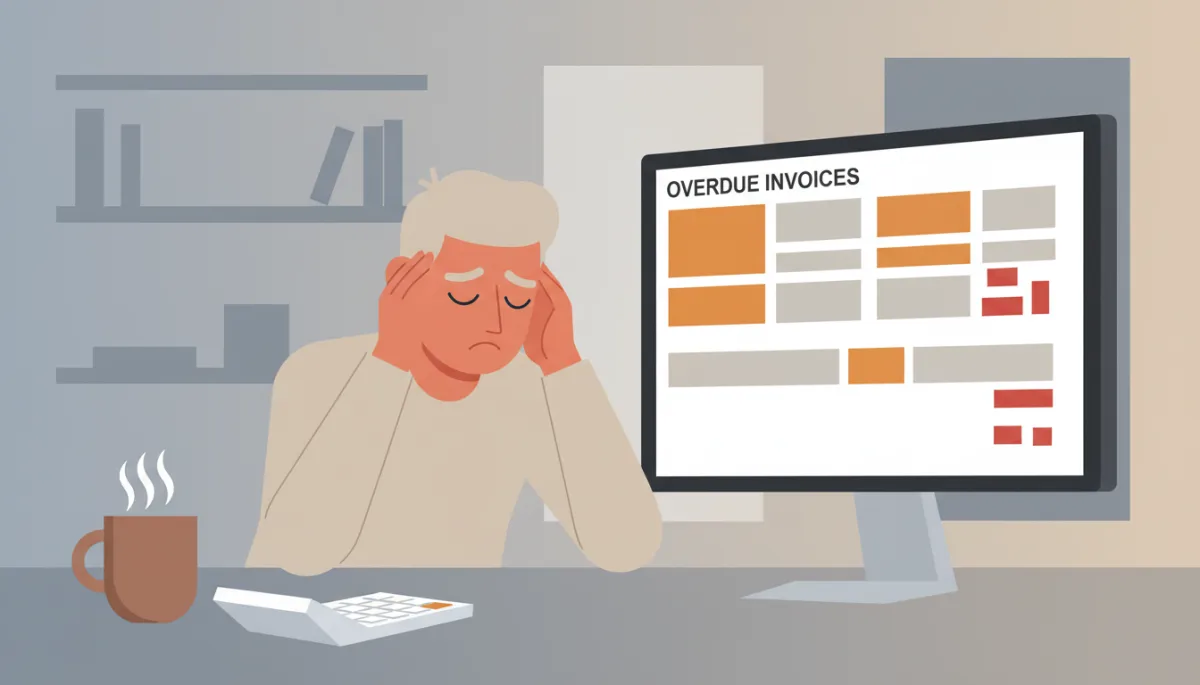
Emotional strain from late payments often shows up long before the balance sheet does.
Practical Strategies to Reduce Late Payments in 2026
1. Set Clear, Firm Payment Terms Upfront
Vague or “standard” terms invite delays. Make your expectations explicit:
Include due dates, late fees, and consequences on quotes, engagement letters, and invoices.
Use shorter terms where possible (for example, 7–14 days rather than 30+).
Offer small discounts for early payment or require payment before release of final work.
2. Use Upfront Deposits to Protect Your Cash Position
Requiring an upfront deposit (for example, 30–50%) before starting work immediately reduces your exposure. It signals you are serious about being paid and filters out clients who are likely to drag their feet. For larger projects, consider milestone billing so you are never months of work in front of your cash.
3. Automate Invoicing and Reminders
Automation takes the emotion out of chasing money. Use accounting or invoicing software to:
Send invoices as soon as work is completed or milestones are reached.
Schedule automatic reminders a few days before and after the due date.
Offer simple online payment options and direct debit where appropriate.
4. Have Direct, Respectful Conversations About Overdue Accounts
Emails are easy to ignore. A short, calm phone call can resolve issues quickly, clarify misunderstandings, and agree on a payment plan if needed. The key is to treat it as a professional, non-negotiable part of doing business-not a personal confrontation. The longer you avoid the conversation, the more likely it is you will never see the money.
Systems and Standards: Moving Beyond “It’s Just How It Is”
Perhaps the most dangerous trend in 2026 is the normalisation of late payments-around 68% of small businesses now see them as an “inevitable cost of doing business” (Banking Day). But accepting this mindset means absorbing the financial and emotional damage yourself.
Instead, 2026 is the year to lift your systems and standards:
Review and tighten your credit and onboarding processes for new clients.
Map out how late payments interact with your new payday super obligations and payroll cycle.
Document a clear collections process-who follows up, when, and how.
💡 Key Takeaway: You cannot control when every client pays, but you can control the strength of your systems and the standards you are willing to uphold.
Ready for Stronger Cash Flow in 2026? Book a Strategy Call
If you are tired of chasing money, stressing over payroll, and worrying about how payday super will affect your business, you do not have to figure it out alone. A focused cash flow strategy can help you:
Identify where late payments are hurting you most.
Design better systems for invoicing, reminders, and collections.
Prepare your cash flow for the 1 July 2026 payday super changes with confidence.
Now is the moment to act. Book a cash flow strategy call and put a clear, practical plan in place so that late payments-and looming super deadlines-stop dictating the future of your business.